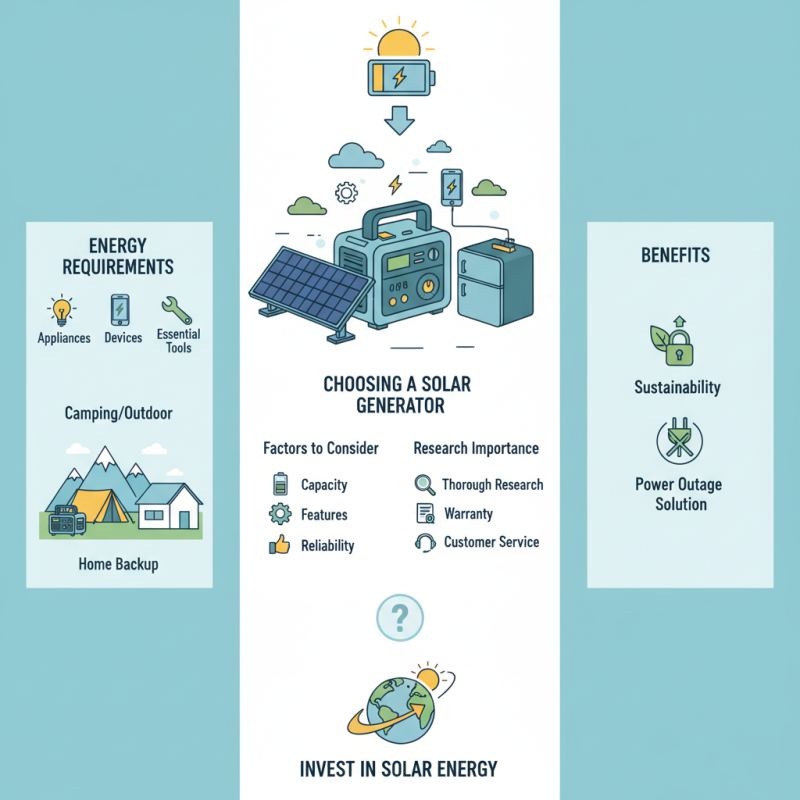
In today's world, the demand for renewable energy sources is rising rapidly. Solar generators have emerged as an excellent solution for many power needs. These devices harness solar energy, converting sunlight into usable electricity. With a solar generator, you can power your appliances, charge your devices, or even run essential tools during a power outage.
When choosing a solar generator, consider your energy requirements. Different models offer varying capacities and features. Some are compact and portable, making them ideal for camping or outdoor activities. Others provide ample power for home backup during emergencies. It’s crucial to assess quality and reliability while considering options. Many brands claim efficiency, but not all deliver as promised.
Investing in a solar generator can contribute to energy independence and sustainability. However, consumers need to conduct thorough research. Some products might have limited warranties or poor customer service. The importance of informed decisions cannot be overstated.
Understanding Solar Generators: Definition and Functionality
Solar generators serve as a reliable source of off-grid power. They harness sunlight through panels, converting it into electricity. This process allows users to enjoy clean energy without depending on fossil fuels. According to a market report, the solar generator market is expected to grow at a CAGR of over 20% by 2027. This growth indicates a rising interest in sustainable energy solutions.
Understanding how solar generators work is essential. They typically include solar panels, a charge controller, batteries, and an inverter. The solar panels collect sunlight and convert it into direct current (DC) electricity. This electricity charges the batteries for later use. The inverter then converts DC to alternating current (AC), which can power household appliances. An average household needs around 30 kWh per day. Thus, selecting a generator with adequate capacity is crucial.
Efficiency isn't always guaranteed. Factors like weather conditions, geographical location, and installation angles can affect performance. A report from the National Renewable Energy Laboratory highlights efficiency drops of 10-25% in less favorable conditions. Users must consider these variables when choosing a solar generator. Awareness of these limitations can lead to more informed decisions and improved energy management.
Best Solar Generator Options for Your Power Needs
| Model |
Rated Power (W) |
Battery Capacity (Wh) |
Weight (lbs) |
Charging Time (hrs) |
Portability |
| Model A |
600 |
500 |
15 |
6 |
Easy |
| Model B |
1000 |
800 |
20 |
8 |
Moderate |
| Model C |
1500 |
1200 |
40 |
10 |
Difficult |
| Model D |
300 |
300 |
10 |
4 |
Easy |
Key Factors to Consider When Choosing a Solar Generator
Choosing a solar generator requires careful consideration of several key factors. Begin by assessing your power needs. What devices will you use? Look for a generator with suitable wattage. Estimate the total wattage of your devices to avoid purchasing a generator that underperforms.
Next, consider portability. If you plan to use it for camping or during emergencies, weight and size matter. Heavier units may offer more power but can be cumbersome to transport. Battery capacity is essential as well. A larger capacity means longer run times for your devices.
Finally, don't underestimate the importance of durability. Solar generators should withstand outdoor conditions. Look for weather-resistant features. As you weigh these factors, remember that balance is key. A more powerful generator may entail a trade-off in portability or price. Reflect on your priorities to make the best choice for your lifestyle.
Top Solar Generator Brands and Their Features
When considering solar generators, it's vital to explore the leading brands and their unique features. Renowned manufacturers often focus on efficiency, portability, and battery capacity. They design products that cater to different user needs, such as camping, emergency backup, or even daily home use. A notable trend is the inclusion of smart technology, allowing users to monitor their power consumption via apps.
One brand emphasizes lightweight designs, making them ideal for outdoor adventures. Their products often have rugged casings, protecting them from harsh conditions. Another focuses on high capacity, capable of powering essential appliances during outages. These generators may feature multiple outputs, ensuring you can charge devices simultaneously. While high-quality options exist, not every brand meets expectations. Users may experience discrepancies in advertised capacity and real-world performance.
It's crucial to evaluate customer reviews to gain insight into reliability. Sometimes, inconsistencies arise in manufacturing quality. Users frequently report issues with battery life and charging speed. Thus, thorough research can help identify the most suitable solar generator for your specific needs. Understanding these features and potential flaws can empower your decision-making process significantly.
Comparative Analysis of Solar Generators by Power Output
When choosing a solar generator, understanding power output is essential. Various models provide different wattage capabilities, impacting efficiency and performance. A typical portable solar generator ranges from 300 to 3000 watts. This range accommodates various needs, from charging small devices to powering larger appliances. According to industry data, generators under 1000 watts are suitable for basic power needs, while those above 2000 watts can support more demanding energy requirements.
Power output is not the only crucial aspect to consider. The type of solar panels and battery capacities also significantly influence generator performance. High-efficiency solar panels can generate more energy in less time. Additionally, lithium-ion batteries are usually preferred for their longevity and quick recharging capabilities. Reports show that models with over 1000-watt output can recharge a smartphone in under an hour. However, some users report that not all generators meet their expectations during overcast days.
Moreover, user feedback highlights a lack of awareness regarding real-world performance. Many consumers anticipate that max output correlates to consistent efficiency. This misconception can lead to disappointment. Generators may not perform at optimum levels in less than ideal conditions. Therefore, it's crucial to research thoroughly, ensuring the selected model aligns with realistic energy needs and expected usage scenarios. The data is clear; informed choices yield better results.
Maintenance Tips for Maximizing Solar Generator Lifespan
Solar generators provide a reliable power source, but proper maintenance is crucial for longevity. Regular cleaning of solar panels enhances efficiency. Dust and debris can block sunlight, reducing energy conversion by up to 20%, according to industry data. Use a soft cloth or sponge and avoid harsh chemicals.
Regular inspections help identify wear and tear. Check connections and cables for signs of damage.
Battery maintenance is equally important. Lithium-ion batteries, commonly used in solar generators, can last up to 10 years with proper care. Keeping them charged between 20% and 80% can significantly extend their life. Overcharging or deep discharging can reduce lifespan dramatically. Monitor battery temperature too; extreme heat or cold can affect performance.
Keeping your generator in a sheltered area protects it from harsh weather. Excessive sunlight can degrade materials. Weather-related damage accounts for a significant percentage of equipment failure. Proper storage during off-seasons can prevent unnecessary wear and increase reliability. Simple practices can dramatically enhance the performance and durability of your solar generator, ensuring it meets your power needs for years to come.
FAQS
: Assess your power needs first. Identify the devices you'll use and their wattage.
Portability matters if you plan to camp or need it for emergencies. Weight and size influence ease of transport.
A larger battery capacity allows longer run times. It’s essential for powering multiple devices.
Solar generators must withstand outdoor conditions. Look for weather-resistant features for reliability.
Power output is crucial. Generators range from 300 to 3000 watts, suitable for different tasks.
No, max output doesn’t guarantee consistent efficiency. Real conditions can affect performance negatively.
High-efficiency solar panels provide more energy faster. They improve overall generator efficiency.
Yes, they offer longevity and faster recharging. Many users prefer them over other battery types.
Users often misunderstand real-world performance. Generators may not work as expected in adverse weather.
Research models thoroughly. Match selections with your actual energy needs and usage scenarios.
Conclusion
Solar generators are an innovative solution for those seeking reliable off-grid power. They function by converting sunlight into electricity, which can be stored for later use. Understanding the key factors to consider when choosing a solar generator is essential for optimizing performance for specific power needs. These factors include power output, battery capacity, portability, and ease of use.
In addition to choosing the right solar generator, it is important to analyze various brands based on their features and output capabilities to find the best fit. Regular maintenance of solar generators is crucial for maximizing their lifespan, ensuring they remain efficient for years to come. By following these guidelines, users can make informed decisions and enjoy sustainable energy solutions that cater to their unique requirements.

 MH Energy