In today's competitive business landscape, adopting solar power solutions is becoming essential. Solar power offers numerous benefits, including cost savings, energy independence, and environmental sustainability. However, choosing the right solution for your business can be challenging. With various options available, it’s crucial to understand your specific needs.
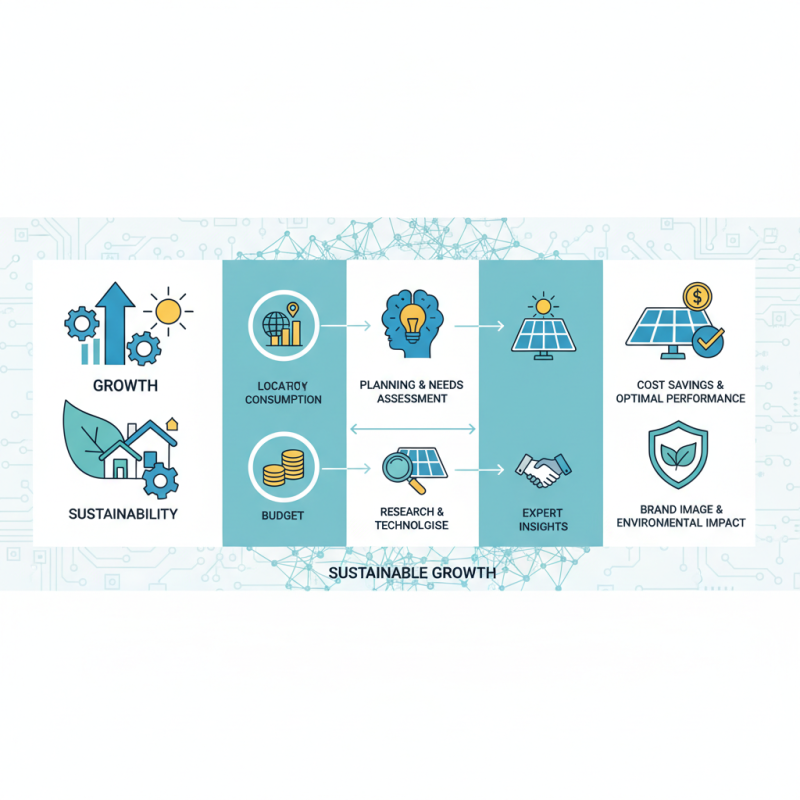
Consider factors like location, energy consumption, and budget constraints before making decisions. Many businesses overlook the importance of these details. Investing in solar power can significantly reduce operational costs. However, without proper planning, you might face unexpected hurdles. Evaluate your energy requirements accurately to ensure optimal performance.
Expert insights can guide you through the selection process. Remember, not every solar power solution fits all businesses. Take the time to research and compare available technologies. Balancing between quality and cost can be tricky. A well-chosen solar power system can enhance your brand's image while making a positive environmental impact. Embrace the opportunity to harness solar energy wisely; the right choice can lead to sustainable growth.
Understanding your business energy needs is essential when choosing solar power solutions. Start by assessing your current energy consumption. Gather data from your utility bills. This information provides a clear picture of your energy usage patterns. You should also consider peak usage times. Are there moments when your energy demand spikes? Identifying these patterns helps you select the right solar system size.
Next, think about your long-term energy goals. Do you plan to expand your business? Will your energy needs increase? Understanding these aspects can influence your solar power choices. You may also want to consider backup options for emergencies. Reliability is key, especially for critical operations. Investigating battery storage solutions can enhance your energy security.
Lastly, don't overlook the potential impact of local climate conditions. Solar efficiency can vary based on sunlight availability. Analyze your geographic location and seasonal changes. This knowledge can guide your decision-making process. It’s crucial to remember that every business is unique. What works for one may not suit another. Be prepared to adapt your plans as needed.
When evaluating different types of solar power systems for your business, consider your energy needs. A tailored approach is crucial. Begin by assessing your current electricity consumption. Analyze your monthly utility bills. This helps you understand your baseline energy requirements. You might find your needs fluctuate, especially with seasonal changes. This variability can impact your solar system’s sizing.
Next, look into the available solar technologies. Photovoltaic (PV) systems are popular for businesses. They convert sunlight into electricity. Then, there are solar thermal systems. These are great for heating purposes. Each type has its advantages. PV systems offer versatility, while thermal systems can efficiently handle significant heating loads.
In addition, consider the installation space. Roof-mounted systems require sufficient area and structural integrity. If rooftop space is limited, ground-mounted systems could be an option. Yet, they may need more land and will require careful site selection. Remember, transitioning to solar is not just about technology; it involves investment and long-term planning. Reflect on your goals and resources before making a choice. This journey may not be perfect, but each step brings your business closer to sustainability.
When analyzing cost-benefit estimates for solar solutions, businesses should consider various factors. The initial investment is significant. However, the long-term benefits can be substantial. Solar installations often lead to lower energy bills. Over time, this reduction can offset initial costs. Many companies find that tax incentives make solar even more appealing.
Maintenance is another cost factor. Solar panels require minimal upkeep. Yet, occasional inspections are necessary. Skipping these can lead to performance issues. A reliable installer will provide a warranty that covers repairs. Proper research on this can save businesses unexpected expenses.
Consulting with energy experts is crucial. They can help estimate potential savings and system sizes. Miscalculations may lead to overspending or insufficient energy supply. Reviewing case studies can provide useful insights. Each business has unique needs and limitations that affect the outcome. Evaluating these before making a decision is vital.
| Solar Solution Type | Estimated Initial Cost ($) | Annual Savings ($) | Payback Period (Years) | Return on Investment (%) |
|---|---|---|---|---|
| Roof-mounted Solar Panels | 30,000 | 7,000 | 4.3 | 23% |
| Ground-mounted Solar Arrays | 50,000 | 10,000 | 5.0 | 20% |
| Solar Canopies | 40,000 | 8,000 | 5.0 | 20% |
| Solar Roof Tiles | 70,000 | 9,000 | 7.8 | 13% |
| Solar Tracking Systems | 80,000 | 12,000 | 6.7 | 15% |
When considering solar power installation, financing options are crucial. Not every business has large upfront capital for solar panels. Various financing models can alleviate this burden.
Leasing is a popular choice. With a lease, businesses pay a fixed monthly amount and avoid high initial costs. This option often includes maintenance, making it hassle-free. However, businesses must consider long-term costs, as they may end up paying more overall.
Another alternative is power purchase agreements (PPAs). Here, companies pay for the electricity generated at a predetermined rate. This can lead to cost savings compared to traditional energy sources. Yet, businesses should reflect on the contract duration. Commitment to a long-term agreement may not suit every organization's needs.
Government incentives can also enhance financing options. Many areas offer tax credits or rebates for solar installations. These can significantly reduce overall expenses. Still, it is essential to research local programs and understand the eligibility criteria. A lack of awareness may lead businesses to miss out on substantial savings.
When selecting a solar provider, reliability and experience are paramount.
A trustworthy solar provider should have a proven track record. According to the Solar Energy Industries Association (SEIA), companies with over five years in business tend to have more refined processes and customer satisfaction levels above 90%. Research potential providers to ensure they have undergone rigorous training and possess relevant certifications. This adds a layer of security for your investment.
Installation quality directly impacts system performance. Review customer testimonials and project portfolios of installation teams. The National Renewable Energy Laboratory (NREL) reports that professionally installed systems can produce up to 25% more energy. Ask about their warranty policies and maintenance plans, which are crucial for long-term efficiency. Unsatisfactory installations can lead to reduced energy production and unexpected costs, highlighting the need for careful selection.
Cost is another factor to ponder. While lower prices may be tempting, they often reflect lower quality. A solid solar installation is not only about initial costs; it’s also about reliability over decades. Regular maintenance is often overlooked but vital for performance. Balancing upfront investment with long-term returns is essential for a successful solar project. Consider all these elements thoughtfully to ensure a reliable solar power solution for your business.
: Start by analyzing your monthly utility bills. This reveals your baseline electricity consumption. Seasonal changes may affect your needs.
Photovoltaic (PV) systems convert sunlight to electricity. Solar thermal systems provide efficient heating for significant loads.
Ground-mounted systems can be an alternative. They require more land and careful site selection for effective installation.
A solar lease involves paying a fixed monthly amount. This option avoids high upfront costs and often includes maintenance.
PPAs allow businesses to pay for electricity generated at a set rate. This can offer savings compared to traditional methods.
Many regions offer tax credits or rebates. These programs can reduce installation costs significantly, if eligible.
Long-term commitments might not suit all organizations. Reflect on your company’s future needs before deciding.
Not knowing about available incentives can lead to missed savings. It’s important to research local programs actively.
Yes, transitioning often involves long-term planning and investment. It may not be perfect, but it promotes sustainability.
When considering solar power solutions for your business, it is crucial to first understand your specific energy needs. This assessment will guide you in selecting the most suitable type of solar power system, whether it's a grid-tied, off-grid, or hybrid solution. Additionally, analyzing cost-benefit estimates can provide insight into long-term savings and environmental impacts, helping you make informed decisions.
Furthermore, exploring various financing options can greatly enhance the feasibility of your solar power installation, allowing for smoother budgeting and investment. Lastly, choosing a reliable solar provider and installation team is essential to ensure quality service and support throughout the process. By carefully navigating these steps, businesses can effectively implement solar power solutions that align with their energy goals and financial capabilities.
MH Energy