Choosing a portable Power Station in 2026 requires more than comparing battery capacity. Global buyers face different climates, outlet standards, transport rules, and emergency needs. A unit suited to a Sydney campsite may disappoint during a cold European outage.
Richard Wang, founder of EcoFlow, has often expressed the industry’s direction in simple terms: “Portable power should make energy more accessible and easier to use.” That principle remains practical. Buyers now expect fast charging, clear battery information, safe thermal management, and dependable mobile control.
This guide examines the leading 2026 models through real-world buying conditions. It considers lithium iron phosphate batteries, usable watt-hours, inverter output, solar input, charging speed, noise, weight, and warranty support. Small details matter. A 1,000Wh unit may run a refrigerator overnight, but startup surges can still trigger protection. A compact model may fit an airplane-style travel bag, yet exceed airline restrictions.
Specifications can mislead.
Testing methods also vary between brands. Some companies advertise laboratory capacity, while users measure actual runtime under changing loads. That gap deserves attention. We will compare both published data and practical ownership concerns, including app reliability, replacement parts, and performance after repeated cycles.
The selection is not perfect. Regional pricing changes quickly, and firmware updates may alter user experience. Therefore, this overview avoids declaring one universal winner. Instead, it identifies the best Power Station choices for camping, home backup, remote work, photography, and international travel.
Reliable power is not always the largest power. It is the right balance of capacity, portability, safety, and service.
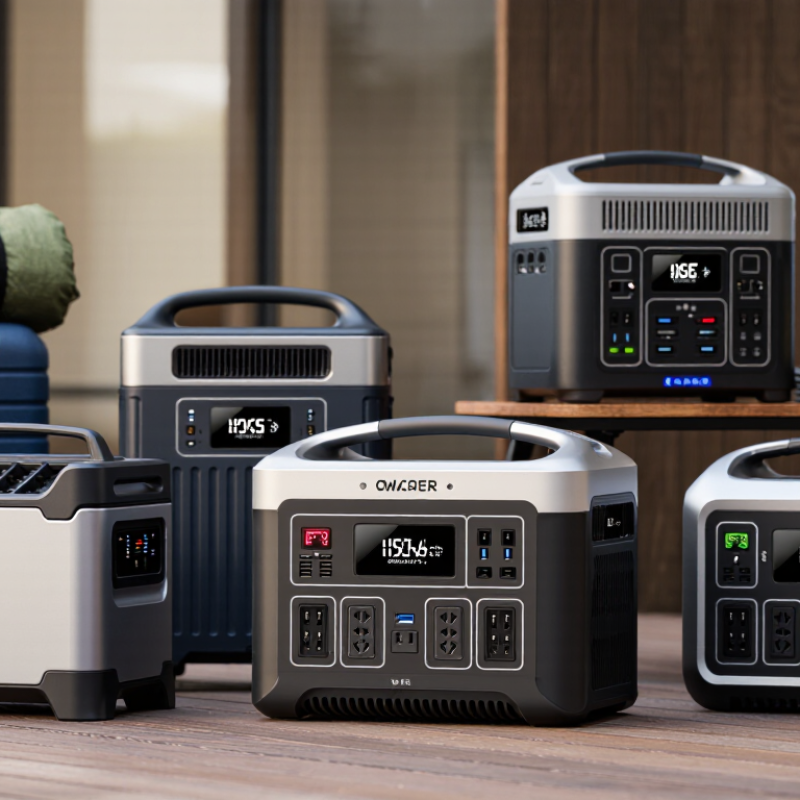
A portable power station in 2026 is a rechargeable battery system with an inverter, control software, and multiple output ports. It stores electricity and supplies power without a fuel engine. Most units support USB-C devices, household sockets, car-style outlets, and LED lighting. Some use lithium iron phosphate cells, which usually offer strong cycle life and improved thermal stability. A battery management system monitors temperature, voltage, and charging conditions. That matters during hot afternoons, cold campsites, or unstable grid periods.
Capacity is measured in watt-hours, while output is measured in watts. A 1,000-watt-hour unit may run a 60-watt router for several hours, but conversion losses reduce the real result. Check both figures. In practical use, a laptop, fan, and small lamp can share one station comfortably. High-demand appliances may drain it quickly. Even experienced buyers misjudge startup power. I sometimes do, especially with motor-driven equipment.
Tips: Match the station to your country’s voltage, plug type, and approved charging options. Check local transport and battery rules before international travel. Look for clear safety certifications, surge protection, a readable display, and a replaceable or serviceable battery policy. Keep the unit dry and ventilated. Do not treat “solar compatible” as unlimited energy; cloudy weather changes the result.
| Portable Power Station Class | Typical Battery Capacity | Continuous AC Output | Peak Output | Typical AC Charging Time | Solar Input Range | Approximate Weight | Common Use Cases | Best Buyer Profile | Global Buying Considerations |
|---|---|---|---|---|---|---|---|---|---|
| Micro Emergency Unit | 100–300 Wh | 100–300 W | 200–600 W | 1.5–3 hours | 60–150 W | 2–5 kg | Phones, tablets, cameras, Wi-Fi routers, LED lights | Travelers, photographers, students, and emergency-kit users | Check airline restrictions, plug type, voltage compatibility, and local solar-panel rules |
| Compact Camping Unit | 300–700 Wh | 300–700 W | 600–1,400 W | 2–5 hours | 100–250 W | 4–9 kg | Portable fridges, lights, laptops, small fans, CPAP devices | Campers, van users, and customers needing overnight backup for small electronics | Pure sine-wave output is preferable for sensitive electronics; verify CPAP runtime requirements |
| Mid-Range Home Backup Unit | 700–1,500 Wh | 700–1,800 W | 1,400–3,600 W | 1.5–4 hours | 200–500 W | 8–16 kg | Refrigerators, routers, medical equipment, workstations, and cooking appliances | Households seeking short-duration outage protection | Compare battery chemistry, transfer time, local warranty support, and socket configuration |
| High-Capacity Home Backup Unit | 1,500–3,000 Wh | 1,800–3,000 W | 3,600–6,000 W | 2–6 hours | 400–800 W | 15–30 kg | Refrigerators, freezers, pumps, home networking, power tools, and extended outages | Homeowners and small offices requiring several hours of backup power | Confirm surge performance, grounding method, circuit limits, and whether expansion batteries are supported |
| Expandable Modular System | 2,000–6,000+ Wh | 2,000–4,000 W | 4,000–8,000 W | 2–8 hours | 600–1,600 W | 25–60+ kg | Long outages, workshops, off-grid cabins, refrigeration, and selected power tools | Buyers who need scalable storage rather than a single fixed-capacity unit | Review expansion limits, battery-balancing requirements, operating temperature, and serviceability |
| Professional Mobile Power Unit | 3,000–10,000+ Wh | 3,000–7,000 W | 6,000–14,000 W | 3–10 hours | 800–2,400 W | 35–90+ kg | Construction equipment, mobile production, field operations, commercial refrigeration, and disaster response | Professional users prioritizing high output, long runtime, and transportable energy storage | Assess lifting points, wheel design, electrical certification, noise level, logistics, and regional safety standards |
Compare usable watt-hours after inverter losses, not the printed capacity. A 1,000Wh unit may deliver only 800–900Wh. Record actual runtime with your devices. Estimates can still be imperfect.
Run a 60W laptop, a lamp, or a small refrigerator separately. Record operating time and room temperature. These details make capacity easier to understand. Test it outdoors.
Check both continuous watts and surge watts. A refrigerator may use 100W while running, then briefly demand 600W. Confirm the station can sustain that surge for several seconds. That matters.
Pure-sine output is generally preferable for sensitive electronics. Also inspect USB-C delivery, port limits, and simultaneous-output restrictions. One device test may hide real campsite limitations.
Compare wall charging time and solar-input limits. Watch charging behavior near full capacity. Solar results change with clouds, cable length, and panel angle. Real-world charging varies.
Look for overheating, overload, and short-circuit protection. Clear battery readings are useful during overnight use. Tested cycle-life data can reveal long-term performance. Specifications may still be confusing.
Larger capacity supports longer outages but may become difficult to carry upstairs. Consider your actual routine, not the largest advertised number. A heavy unit can remain unused.
Confirm voltage, frequency, outlet types, and charging compatibility. Check local service access and replacement-part availability. Warranty support may be difficult in some regions. Read the manual carefully.
Charge it fully, connect your real devices, and record runtime. Keep at least a 20% energy margin. Inspect cables and storage conditions regularly. I sometimes overlook cable placement.
In 2026, a portable Power Station is more than a backup battery: it is a flexible energy hub for travel, outdoor activities, emergency preparation, remote work, and household power support. This guide explains how to compare battery capacity, continuous and peak output, charging speed, solar input, recharge options, and energy efficiency. Understanding these specifications helps buyers match a unit to their actual needs, whether they want to charge personal devices, operate small appliances, or support essential equipment for longer periods.
The article also examines practical features such as portability, display accuracy, connectivity, noise control, battery management, and expandable capacity. For global buyers, safety certifications, regional electrical standards, plug compatibility, transport requirements, warranty coverage, and local service availability are equally important. By balancing performance, safety, durability, size, and total cost, readers can select the best Power Station for their environment and intended use instead of choosing solely by battery size or advertised output.

 MH Energy