The global demand for renewable energy has placed a spotlight on Systems Solar. As buyers navigate this vibrant market, informed decisions are crucial. Mark Johnson, a prominent industry expert, once said, "Investing in solar systems is not just about savings; it’s about sustainable future." This highlights the double significance of choosing the right system.
Understanding the intricacies of Systems Solar can be overwhelming. Various technologies and products exist, each with unique attributes. Buyers must consider their energy needs, budget, and local regulations when evaluating options. Many rush into decisions without thorough research. This can lead to regret and unexpected costs.
The market will continue to evolve. Quality and efficiency are key factors for success. As competition grows, products will improve. Buyers may find it challenging to keep up. Yet, informed choices can yield long-term benefits. Emphasizing research and expert opinions can help mitigate risks and enhance satisfaction. The solar landscape is full of potential, but careful planning is essential.
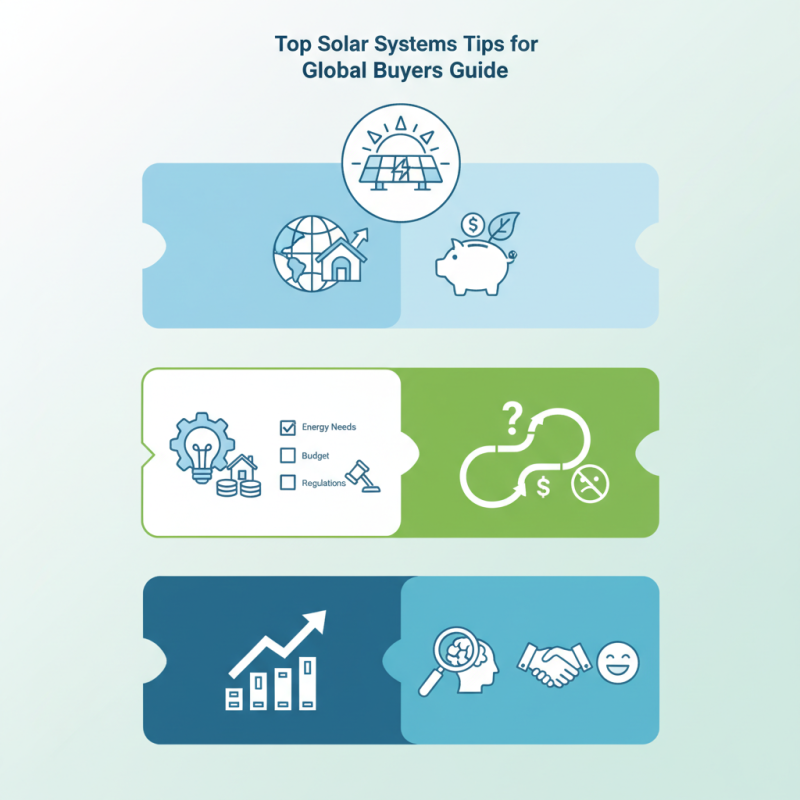
Understanding Different Types of Solar Systems Available Globally
When exploring solar systems, it's vital to understand the various types available. Grid-tied systems are common for residential use. They connect directly to the power grid, allowing users to draw electricity when needed. This setup often includes net metering, which can offset utility costs. Many homeowners find them reliable and cost-effective. However, they depend on the grid, which can be a disadvantage during outages.
Off-grid solar systems are another option. These systems operate independently of the grid, making them ideal for remote locations. They usually require battery storage to ensure power supply at night or during cloudy weather. While they offer energy independence, the initial costs can be higher. Users face challenges in sizing their systems correctly to meet their needs.
Hybrid systems combine both grid-tied and off-grid features. They provide flexibility and can store energy in batteries. This design caters to diverse energy needs but may have complex setups. Choosing the right type is crucial. Each solar system type has trade-offs that require careful consideration.
Global Solar Systems Types Distribution
Key Factors to Consider When Buying Solar Systems
When considering solar systems, several key factors come into play.
Efficiency is paramount.
The average solar panel converts about 15-20% of sunlight into energy.
Higher efficiency means more energy production for less space. For homeowners with limited roof area, investing in high-efficiency panels can maximize energy output.
Cost is also a critical factor.
The average installation cost in 2022 ranged from $15,000 to $30,000, depending on system size and location. Many buyers shy away from upfront expenses but overlook potential savings.
According to a report by the International Energy Agency, a well-placed solar system can reduce energy bills by up to 50% over time.
Don’t overlook maintenance needs. While solar panels require minimal upkeep, occasional cleaning and inspections are necessary.
Neglect can lead to decreased performance. Furthermore, some buyers may prioritize warranty length.
A standard warranty can span 20-25 years, but shorter options might indicate lower quality.
It’s essential to weigh these details carefully when making a decision.
Evaluating Solar Panel Efficiency and Performance Ratings
When purchasing solar panels, understanding efficiency and performance ratings is crucial. Efficiency defines how much sunlight a panel can convert into usable electricity. High-efficiency panels often provide better performance in limited space, making them ideal for urban settings. If you have a smaller roof, consider investing in these.
Performance ratings give insight into how solar panels perform under varying conditions. They indicate power output in real-world scenarios. Look for panels with solid warranties and consistent output over time. Solar panels can degrade, so understanding their longevity is essential. Some panels perform well initially but drop in efficiency sooner than expected.
Not everyone requires the most efficient panels. Depending on your energy needs and location, less efficient options may also work. Evaluating your specific situation is vital. Research performance metrics and consider regional variations in sunlight exposure. Making informed decisions will ensure your investment meets your energy demands effectively. Be open to exploring various options before finalizing your choice.
Top Solar Systems Tips for Global Buyers Guide
| Solar Panel Type |
Efficiency Rating (%) |
Performance Ratio (%) |
Temperature Coefficient (%/°C) |
Warranty (Years) |
| Monocrystalline |
20.5 |
80 |
0.3 |
25 |
| Polycrystalline |
18.5 |
78 |
0.4 |
25 |
| Thin-Film |
11.0 |
70 |
0.2 |
20 |
| Bifacial |
19.0 |
82 |
0.3 |
30 |
The Importance of Local Regulations and Incentives in Solar Purchases
When considering solar purchases, understanding local regulations is crucial. Regulations vary widely between regions. They determine installation processes, grid access, and energy credits. Familiarizing yourself with these rules can save time and costs.
Incentives can significantly influence your decision. Tax credits, rebates, and grants might be available in your area. These financial aids can reduce the overall investment in solar systems. However, evaluating their impact can be complex. Some incentives might have stipulations that complicate the purchase.
Tip: Always research your local laws. Check if solar panel installation requires permits. Know how to connect to the grid legally.
Tip: Look into financial incentives offered by local governments. They can motivate you to switch to solar energy.
Tip: Stay updated on changing regulations. Policies can shift, impacting your long-term savings. These nuances often require ongoing attention.
Navigating local regulations and incentives can feel overwhelming. Many buyers struggle with this aspect. It’s essential to adapt and learn through the process. Being informed helps in making better choices.
Tips for Selecting Reliable Solar Installers and Service Providers
When choosing solar installers, quality matters.
Reports indicate that up to 30% of solar systems underperform due to poor installation. This makes it crucial to vet potential service providers thoroughly.
Ask for references, and inspect their previous work. Customer reviews can provide insights into their reliability and expertise.
Verify their experience in your area. Climate and regulations vary widely. A contractor familiar with local conditions will ensure your system is optimized.
The U.S. Solar Industry Association emphasizes the need for contractors to have relevant certifications. This not only showcases their commitment but also their knowledge of the latest technologies and practices.
It’s worth noting that the lowest bid isn’t always the best. Insufficient warranty provisions can lead to long-term costs. Many installations fail because they lacked proper after-sales support.
A comprehensive warranty should cover both equipment and services. Investing more upfront can lead to higher efficiency and longer lifespan for your solar system.
FAQS
: Grid-tied systems connect directly to the power grid. They allow users to draw electricity when needed.
Off-grid systems work independently of the grid. They are ideal for remote areas but require battery storage.
Sizing systems to meet energy needs can be difficult. Initial setup costs are often high as well.
Hybrid systems combine grid-tied and off-grid features. They store energy in batteries, offering flexibility.
Efficiency affects energy output. Higher efficiency panels produce more energy, which is crucial for limited roof space.
Installation costs typically range from $15,000 to $30,000. This depends on system size and location.
Solar panels require occasional cleaning and inspections. Neglecting maintenance increases the risk of decreased performance.
Regulations affect installation processes and energy credits. Understanding them can save you time and money.
Incentives like tax credits and rebates can reduce your overall investment. Research local options to find what applies.
Policies can shift over time. Staying informed helps you adapt and ensures better long-term savings.
Conclusion
When considering the purchase of Systems Solar, it is crucial to understand the different types of solar systems available around the globe. Buyers should assess various factors, including energy needs and geographical location, and compare the efficiency and performance ratings of solar panels. This awareness aids in making informed choices that maximize long-term benefits.
Additionally, being knowledgeable about local regulations and available incentives can significantly impact the financial viability of a solar investment. Selecting reliable solar installers and service providers is essential for ensuring the successful implementation and maintenance of the solar system, ultimately contributing to the sustainability and efficiency of energy usage on a global scale.

 MH Energy